
Structural Steel Solutions & Industry Insights
The Contractor’s Guide to Structural Steel
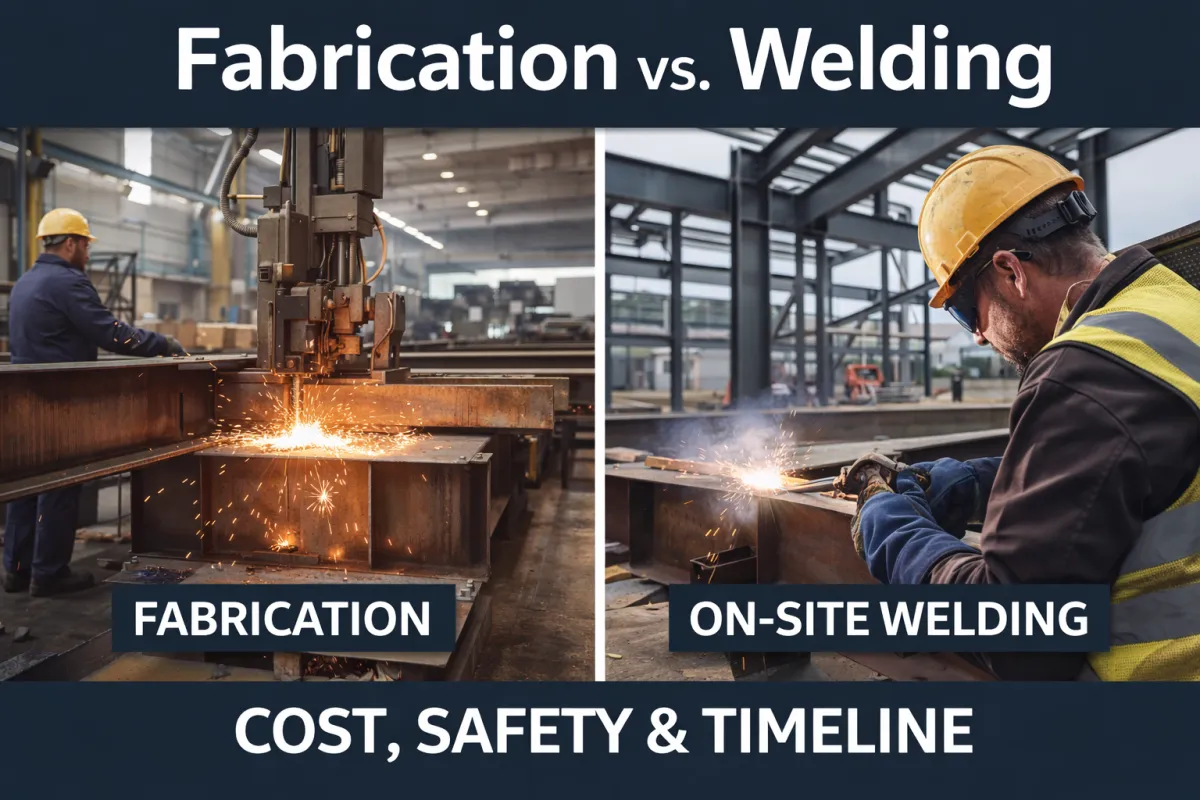
Structural Steel Fabrication vs. On-Site Welding: Cost, Safety, and Timeline Comparison
Structural Steel Fabrication vs. On-Site Welding: Cost, Safety, and Timeline Comparison
When planning a commercial or industrial project in the United States, one critical decision can significantly impact cost, safety, and schedule:
Should structural steel be fabricated in a controlled facility — or welded on-site?
For U.S. contractors, developers, and procurement managers, understanding the differences between structural steel fabrication and on-site welding is essential for minimizing risk and protecting margins.
This guide breaks down the cost, safety, and timeline implications of both approaches.
What Is Structural Steel Fabrication?
Structural steel fabrication refers to the process of cutting, welding, drilling, and assembling steel components in a controlled manufacturing facility before delivery to the job site.
An AISC certified structural steel fabricator typically performs:
Precision cutting and shaping
Controlled welding procedures
Quality inspections and documentation
Shop drawing integration
Surface preparation and coatings
Components are then delivered ready for installation.
What Is On-Site Welding?
On-site welding involves performing fabrication and welding tasks directly at the construction site.
This approach may include:
Field welding
On-site modifications
Structural adjustments
Emergency corrections
While sometimes necessary, heavy reliance on field welding introduces variability.
1. Cost Comparison: Fabrication vs. Field Welding
Structural Steel Fabrication Costs
Fabricating steel in a controlled shop environment often results in:
Lower labor cost per weld
Higher productivity rates
Reduced material waste
Better equipment efficiency
Although shop fabrication may appear higher upfront in some bids, it often reduces total project cost due to efficiency and fewer field delays.
Cost Advantages:
Controlled workflow
Specialized machinery
Bulk material handling
Less weather disruption
On-Site Welding Costs
Field welding often increases costs due to:
Slower productivity
Higher skilled labor rates
Weather interruptions
Equipment mobilization
Inspection delays
Unplanned field welding can quickly impact margins, particularly in large commercial or industrial structural steel projects.
Bottom line:
For most U.S. structural steel projects, shop fabrication reduces total installed cost when planned correctly.
2. Safety Considerations
Safety in Fabrication Facilities
Controlled fabrication shops offer:
OSHA-compliant environments
Proper ventilation systems
Controlled welding positions
Reduced fall hazards
Consistent quality inspections
Risk exposure is significantly lower in a managed facility.
Safety Risks of On-Site Welding
Field welding introduces:
Elevated work risks
Weather-related hazards
Congested site conditions
Limited environmental controls
Increased fire risk
For contractors focused on reducing OSHA incidents and insurance exposure, minimizing field welding is often a strategic decision.
3. Timeline & Project Schedule Impact
Structural Steel Fabrication Lead Times
Professional structural steel fabrication companies provide:
Defined production schedules
Predictable delivery timelines
Coordinated shipment sequencing
Multi-phase delivery planning
Fabrication can occur simultaneously with site preparation, reducing total project duration.
On-Site Welding Timeline Risks
Field welding can slow schedules due to:
Weather delays
Inspection bottlenecks
Coordination conflicts
Labor availability issues
Unexpected field modifications can create cascading delays across trades.
For large U.S. commercial projects, schedule predictability is often more valuable than marginal upfront savings.
When Is On-Site Welding Necessary?
Field welding is sometimes unavoidable in:
Retrofit projects
Design changes
Emergency structural adjustments
Remote infrastructure sites
However, relying heavily on field welding for primary structural elements often increases both risk and cost.
The Strategic Advantage of Working with an AISC Certified Fabricator
Partnering with an experienced structural steel fabrication company in the USA offers:
Code-compliant production
Certified weld procedures
QA/QC documentation
Reduced field adjustments
Improved installation efficiency
When fabrication and detailing are properly integrated, projects experience fewer change orders and less rework.
Which Approach Is Right for Your Project?
For most commercial, industrial, and infrastructure projects in the U.S.:
✔ Shop-based structural steel fabrication reduces risk
✔ Controlled welding improves quality
✔ Predictable lead times protect schedules
✔ Lower total installed cost improves margins
Field welding should supplement fabrication — not replace it.
Planning a Structural Steel Project?
If you're evaluating structural steel fabrication services for an upcoming U.S. project, our engineering team can review your drawings and provide a detailed fabrication estimate.
To prepare an accurate quote, we typically require:
Project location
Estimated tonnage
Required specifications (AISC class, coatings, etc.)
Delivery timeline
Shop drawings or structural plans
Request a Structural Steel Fabrication Quote
Our team supports U.S. contractors with:
AISC-compliant structural steel fabrication
Commercial and industrial project support
Coordinated multi-state delivery
Engineering and detailing integration
Typical response time: 24–48 hours
Submit your project details today to receive a professional review and estimate.

Building structured lead pipelines that turn search intent into sales-ready opportunities for industrial businesses.
© 2026 - Seun Adebowale - All Rights Reserved.